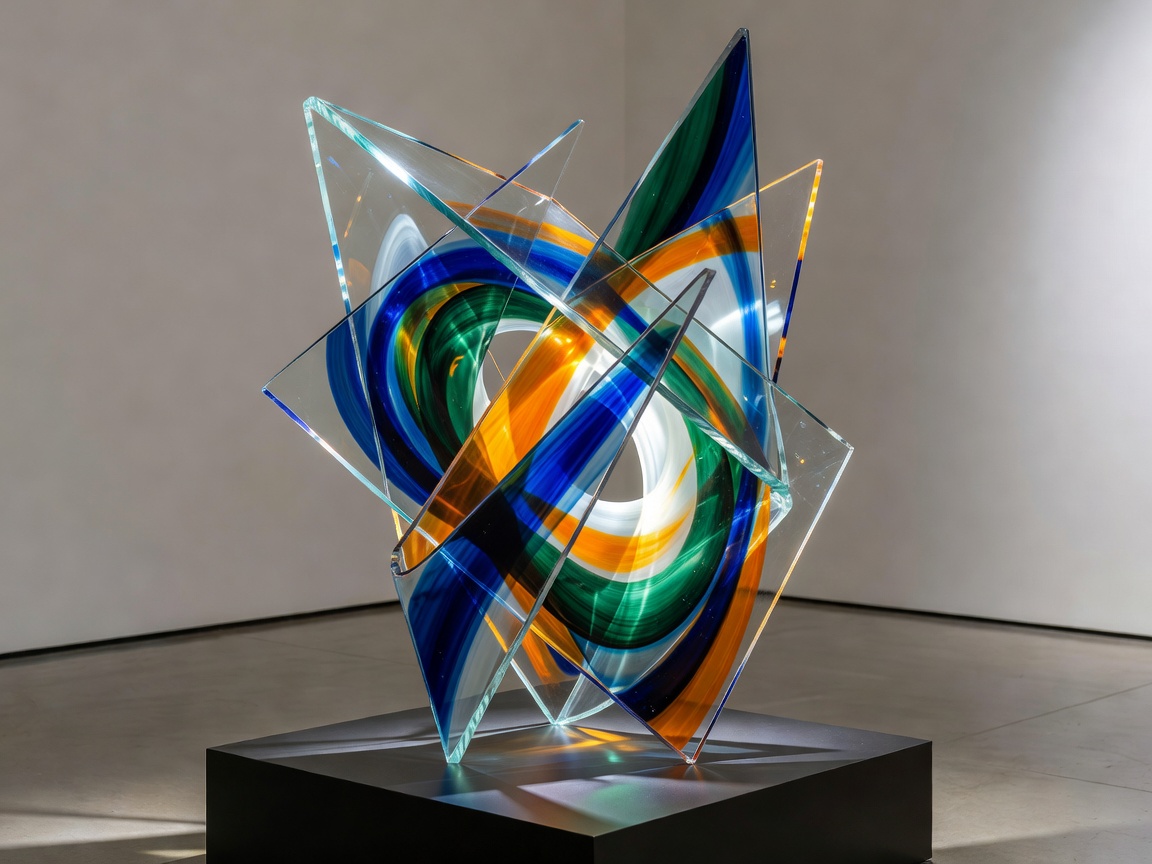
Contemporary glass is a field of different intentions. A drinking vessel, a large sculptural form, an architectural screen and an experimental installation may all use glass, but their success criteria differ. Process choices follow the brief: function, location, scale, light, durability, access, maintenance and the maker’s available facilities. No one approach is universally superior.
Functional glass
Functional work is designed around use. A vessel may need stable footing, a comfortable rim, appropriate volume and surfaces that are practical to clean. The maker considers handling as well as appearance. Blowing, mould-based production, kiln forming and finishing can all contribute, depending on form and production goals. A visually striking object is not automatically comfortable or suitable for repeated use; intended use should be stated clearly.
Advantages include a direct relationship between material, everyday action and design. Constraints include durability expectations, repeatability, tolerances and the challenge of making complex forms perform reliably. Surface decoration must be considered alongside cleaning, wear and material compatibility.
Sculpture and installation
Sculptural glass treats form, light, scale and viewing conditions as primary elements. A sculpture may be blown, cast, kiln formed, assembled or produced through several processes. An installation can include multiple components and may respond to a particular room or route through a space. The work can explore transparency, reflection, color, weight or fragility without being required to serve a household function.
Scale introduces practical constraints: handling, transport, support, assembly and installation planning. Light changes the appearance of transparent or reflective work throughout the day and across viewing angles. A temporary installation may have different conservation requirements from an object intended for long-term display.
Architectural glass
Architectural glass participates in buildings as glazing, screens, partitions, facades or integrated artworks. It must be considered in relation to structure, safety, weather, maintenance and building requirements. The technical specification depends on the intended use and jurisdiction; a visual concept alone cannot establish suitability. Designers, fabricators and building professionals need to coordinate early so artistic intent and performance requirements are addressed together.
Architectural work can make light and material part of an occupied environment. It also has a larger coordination burden than a freestanding studio object. Installation systems, access for maintenance, replacement and environmental conditions are part of the design question.
Experimental methods and mixed media
Experimental studio work may combine glass with metal, stone, light, digital fabrication or other materials. Mixed media expands expressive options but creates interface problems: materials expand differently, age differently and need different supports. A combination that works visually may not be stable, repairable or appropriate for a particular setting. Testing and specialist advice should be planned within a qualified studio or professional context.
Digital design can support pattern development, repeatable geometry or planning for fabrication. CNC-assisted coldworking can contribute controlled cutting or shaping when equipment, material and project requirements align. Digital tools do not remove the need for material judgment. The quality of the result still depends on the glass, tooling, design decisions and finishing.
Kiln work and surface approaches
Contemporary kiln forming supports layered, shaped and cast work. Artists may combine glass types, moulds, inclusions or surface treatments, but compatibility and process limits require specialist assessment. Surface treatments can alter opacity, texture, reflection or color. The treatment should fit the object's purpose and care needs, not only its initial appearance.
Advantages include the ability to plan layered compositions and repeat certain forms. Limitations include kiln capacity, mould constraints, cooling time and the need for additional coldworking. Process choices affect both visual character and practical production schedule.
Compare the practice categories
Functional glass prioritises use and handling. Sculptural glass prioritises form and visual experience. Architectural glass must operate in a building context. Experimental studio work may question categories or combine materials. These descriptions overlap; an object can be both functional and sculptural, or architectural and experimental. The distinction helps clarify what questions need answers.
Good for
This guide helps artists, designers, students and commissioners frame a project before selecting a technique. Use it to distinguish a tabletop object from a building component, identify where another specialist is needed, and anticipate installation or maintenance questions.
What to know
Define the brief, intended environment, scale, use, finish and care expectations first. Ask which processes are available and what specialist input the project requires. For buildings or public installations, seek qualified technical advice; this overview is not a safety or compliance specification. Related reading: Glassmaking Techniques and Glass Studio Workshops.