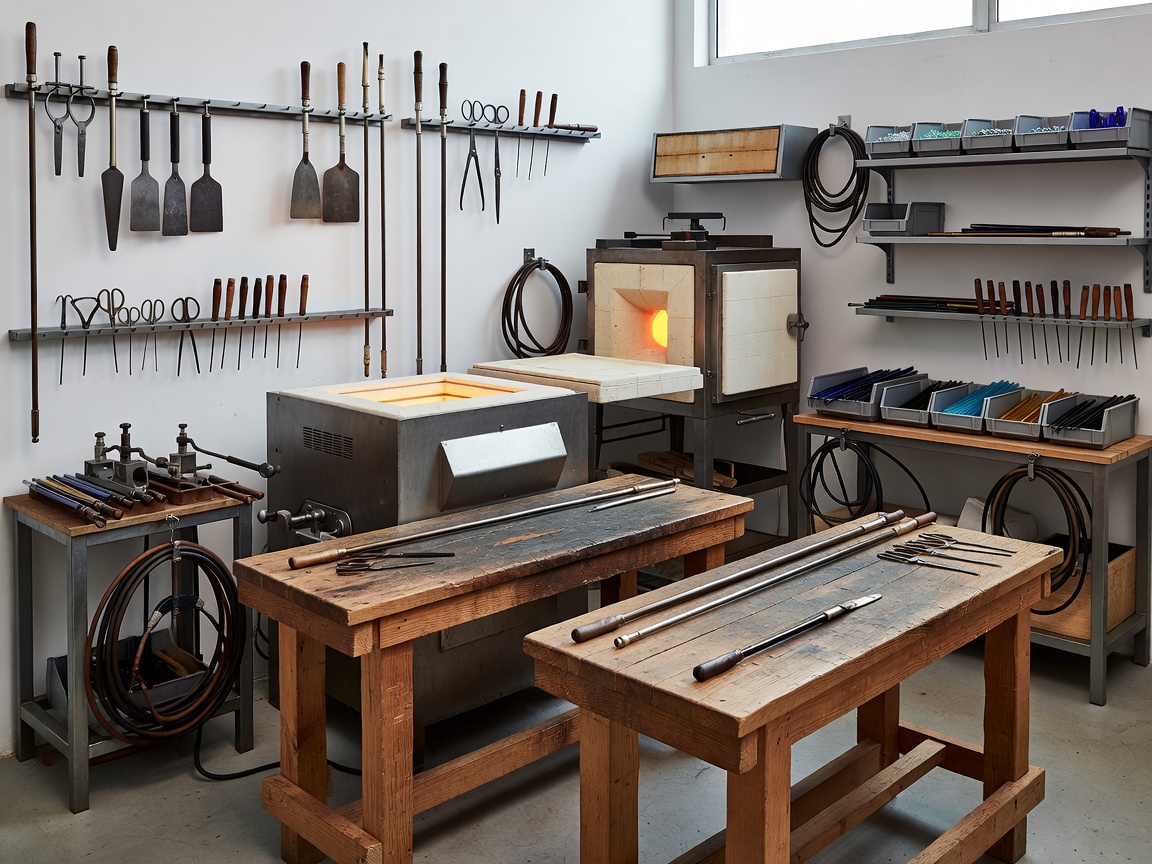
Glass studios organise space around different material states. A hot shop handles heated glass and specialist tools. Coldworking rooms support cutting, grinding and polishing after forming. Kiln rooms contain equipment for firing, fusing, slumping or annealing. Some teaching facilities combine these areas; others focus on one process. The right choice depends on what you want to learn and what the facility can responsibly support.
Hot-shop environments
A hot shop is planned around heat, movement, material handling and communication. Furnaces and reheating equipment belong within controlled work zones. Clear routes help people move tools and workpieces without crossing unnecessarily. The equipment category and layout vary with the processes offered. Visitors should follow marked boundaries, staff directions and site rules rather than assuming that a viewing point is a safe working area.
Ask how beginners are supervised, what demonstrations include and which tasks remain instructor-only. A clear answer is a sign that the studio has considered the difference between observation and participation. Do not expect a short visitor experience to include independent furnace operation.
Coldworking areas
Coldworking spaces support material removal and surface refinement. Typical equipment categories include cutting, grinding, polishing and engraving systems. Water management, fragment control, ventilation and housekeeping are part of a responsible setup. Abrasive processes can create sharp debris and potentially hazardous dust. A workshop should explain its control measures and the protective equipment expected before a learner starts.
Coldworking may happen after hot forming or serve as the main process. Ask whether the course includes edge finishing, surface refinement or only the initial shaping. The difference affects both the learning outcome and how much work remains after the session.
Kiln rooms and teaching spaces
Kiln rooms may support annealing, fusing, slumping, casting or other heat-based work, depending on the facility and equipment. The room needs controlled access and clear supervision arrangements. A teaching studio may use demonstrations, pre-prepared materials or group projects to make a process accessible. Course structure is not a measure of studio quality by itself; what matters is whether the stated activity matches your expectations and experience.
Confirm what is included in a session: material, firing, finishing, collection arrangements or follow-up. Do not assume that a finished object will be ready immediately. Some processes require controlled cooling or additional finishing outside the learner's session.
Layout, ventilation and protective equipment
Good layout supports separation between hot, cold and clean work. Ventilation needs depend on the work performed and materials used. Protective equipment is task-specific; it may include eye, hand, body or respiratory protection, but staff should explain what is appropriate for the actual activity. Ask how the studio introduces hazards, handles incidents and communicates emergency arrangements. A responsible operator welcomes practical questions and does not treat safety as an optional extra.
Visitors should check whether access is supervised, where they may stand, what clothing is required and whether photography is permitted. A public demonstration has different requirements from a hands-on class. Mobility, sensory and communication needs can also affect how safely a person participates; contact the provider to discuss access before booking.
How to select a workshop
Start with the process, not the most dramatic photograph. Compare a hot-shop introduction with a kiln-forming class only after deciding whether you want to explore blowing, sheet glass, casting or surface work. Read the learning outcomes. Check instructor qualifications and experience in the relevant process, class size and the supervision model. Ask whether safety briefings, protective equipment and accessible facilities are provided.
Look for specific, current details from the workshop itself. This reference does not verify opening hours, fees, schedules or availability. Confirm those directly with the provider. Ask about cancellation terms, materials, finished-object collection and what happens if a project needs extra cooling or finishing time.
Advantages and limitations
Shared studios provide access to specialised equipment, space and experienced instruction without requiring learners to operate a full facility independently. Teaching settings can introduce unfamiliar processes in a controlled context. Limitations include restricted access, fixed class projects, waiting time for equipment and boundaries around independent use. Some methods require extensive training before a learner can progress beyond observation or guided participation.
Good for
Use this checklist if you are choosing a first class, comparing a hot shop with a coldworking facility, planning a studio visit or assessing whether a workshop can support a defined project. It also helps experienced makers identify where a facility's process range ends and specialist referral may be needed.
What to know
Before committing, establish the process, learning outcome, instructor supervision, safety briefing, protective equipment, ventilation arrangements, access requirements and what the fee or booking includes. Ask who controls hazardous equipment and how studio rules are communicated. Never operate equipment without training and authorisation. See Glassmaking Techniques and Contemporary Glass Practice for process and practice context.