Glass changes with heat, gravity, pressure, tooling and time. A technique is not only a way to make a shape. It also sets limits on thickness, scale, repeatability and finish. The descriptions below are comparative, not operating instructions. Hot work, torches, kilns, sharp edges and glass dust require qualified supervision and established safety controls.
Hot forming: blowing, casting and kiln work
Glassblowing uses air pressure to expand a heated gather into a hollow form. A blowpipe, shaping tools and a suitable hot-shop environment are typical equipment categories. The material responds to gravity and temperature: its working consistency changes as it cools. Blowing supports vessels and hollow sculpture, and permits fluid changes in wall profile. It depends on coordinated handling and time-sensitive teamwork. Size and symmetry require control; finishing and annealing are part of the production plan.
Casting forms glass within or around a mould. The mould defines much of the silhouette and can support solid, detailed or sculptural forms. Casting can produce mass and depth that are difficult to achieve through blowing. Mould preparation, material compatibility and a carefully controlled cooling cycle matter. Mould complexity, surface contact and long processing times can limit scale and repeatability. The resulting surface may need coldworking.
Kiln forming is a broad category in which glass is heated in a kiln until it softens, bends, fuses or conforms to a mould. Fusing joins compatible pieces through heat; slumping bends a sheet over or into a form. These are related but distinct outcomes. Kiln forming suits panels, shallow vessels, layered compositions and architectural components. It can offer consistent geometry and controlled layering. Moulds, kiln capacity, material compatibility and cooling management constrain thickness, detail and scale. Edges may need grinding or polishing.
Small-scale heat: lampworking
Lampworking shapes glass rods or tubes in a focused flame, using tools to pull, press, wind or join softened material. Torches, ventilation and suitable protective equipment belong to the specialist work environment. The scale is often smaller than furnace-blown or kiln-cast work. Fine detail and direct manipulation are strengths; size, thermal gradients and material handling can be limiting factors. Beads, small sculptural forms and laboratory-related glasswork are among its applications. Annealing and careful inspection matter because uneven cooling can leave stress.
Coldworking: cutting, polishing and engraving
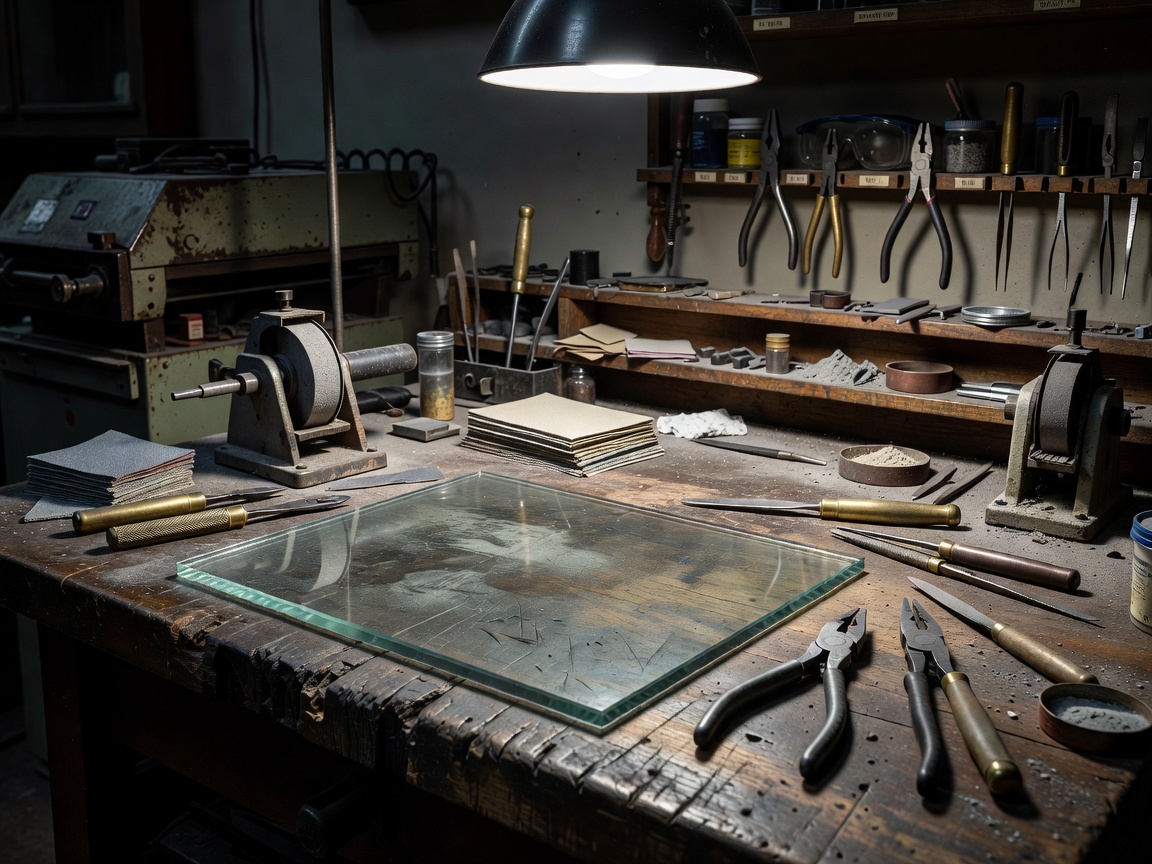
Coldworking shapes glass after it has cooled. Cutting and grinding remove material; polishing refines a ground surface to a smoother finish; engraving creates marks or relief through abrasion or related methods. Equipment categories include saws, grinders, polishing systems and engraving tools, used with appropriate guarding, dust management and training. Coldworking offers precise edges, facets and surface detail without reheating the whole object. It is slower than some forming operations, removes material irreversibly and may introduce chips or stress if handled poorly. Abrasive work requires controls for sharp fragments and respirable dust.
Stained glass and assembled work
Stained glass combines pieces of colored or painted glass into a larger panel, commonly joined by a supporting assembly system. It is an architectural and decorative method rather than a single way of making glass. The pieces can create color, pattern and transmitted light. Repairs, structural support, weather exposure and installation conditions affect long-term performance. It is suited to windows and screens, but not every design or site suits the weight, maintenance needs or light conditions of a panel.
Compare the trade-offs
| Process | Best suited to | Useful advantage | Common constraint |
|---|---|---|---|
| Blowing | Hollow forms | Fluid volume and profile | Coordination and scale |
| Casting | Solid or detailed forms | Mass and mould definition | Mould and cooling demands |
| Kiln forming | Panels and shaped sheets | Layering and repeatable geometry | Capacity and compatibility |
| Coldworking | Edges and surfaces | Controlled finish detail | Material removal and dust |
Good for
Use blowing when a hollow, responsive form is central. Consider casting for mass, depth or mould-derived detail. Choose fusing or slumping when sheet glass and layered design are primary. Lampworking suits smaller, detailed forms. Coldworking is the finishing route when edges, facets or engraved surfaces define the brief. Stained glass is relevant when a composed panel must transmit light or relate to architecture.
What to know
Ask what glass composition and compatibility rules apply, which processes the facility supports, and what finishing is included. Clarify who supervises each hazardous stage and how the workspace manages heat, sharp fragments and dust. Do not infer that two visually similar glasses can be combined safely. Follow manufacturer information and established studio procedures. For a wider context, read Glass Studio Workshops and Contemporary Glass Practice.
This guide does not replace instruction. Do not operate furnaces, torches, kilns or abrasive equipment without appropriate training and supervision.